Why Balance Is So Hard in Modern Life | An Ayurvedic Perspective

Balance isn’t difficult because we are failing.
It’s difficult because modern life is designed to pull us away from it.
We live in a world where speed is rewarded, productivity is praised and constant stimulation is normal. Days are filled with notifications, deadlines and responsibilities and an unspoken pressure to keep up — even when the body is asking for rest.
Stress, in this context, isn’t an exception. It’s the baseline.
Busyness has become so normalized that pausing can feel uncomfortable. Many of us move from task to task without ever fully arriving anywhere — meals eaten quickly, moments half-noticed and days blurring into weeks. There is very little space to simply stand and stare, to notice beauty or to breathe without purpose.
And yet, something within us knows this pace is not sustainable.
Stress Is Not the Enemy — Until It Crosses a Threshold
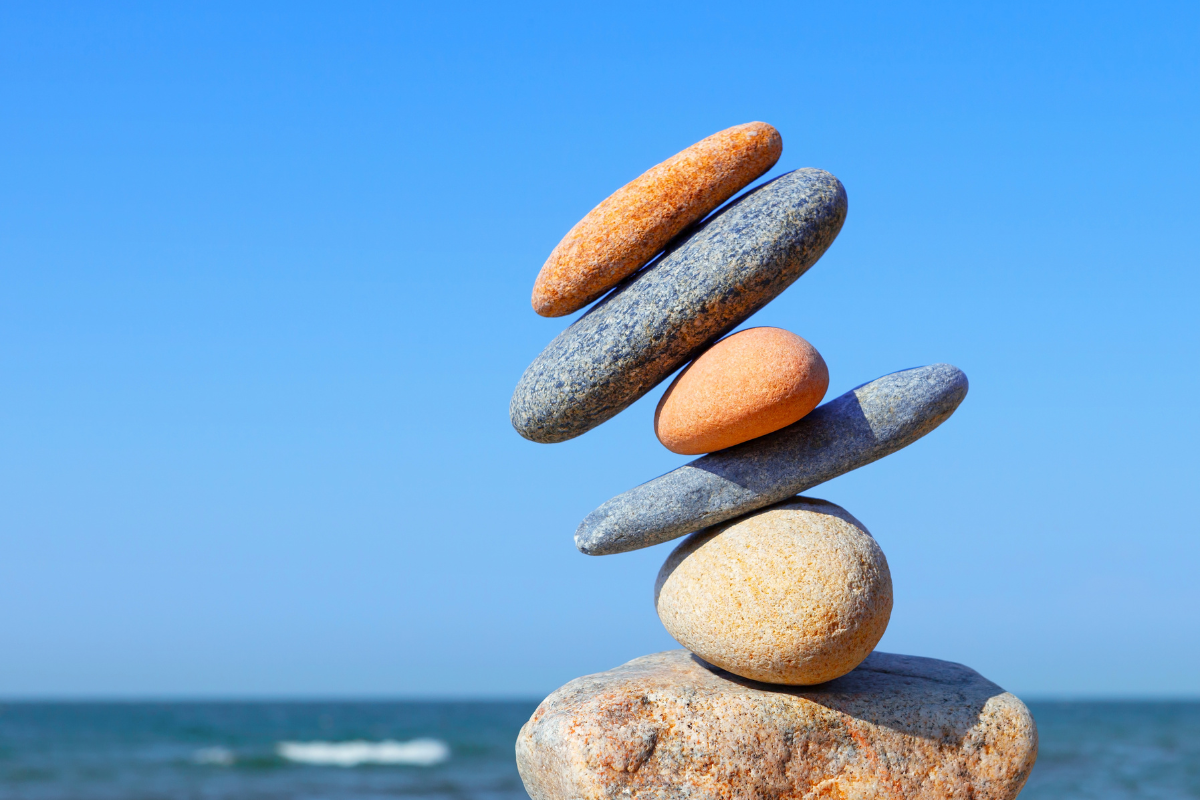
From an Ayurvedic perspective, stress itself is not inherently bad. Life naturally includes effort, change and challenge. The body and mind are intelligent and adaptive.
Ayurveda teaches that stress becomes harmful when it crosses a threshold — the point beyond which the mind-body system can no longer function optimally.
At this point, patterns begin to appear:
Digestion becomes irregular or weak
Sleep feels light or unrefreshing
The nervous system stays on high alert
Energy comes in bursts followed by crashes
The mind struggles to settle even during rest
This is not a personal weakness. It is a physiological response to prolonged overload.
The Rat Race Without a Pause

Modern life often resembles a race with no clear finish line. We move quickly, driven by expectations — internal and external — without stopping to ask what the pace is costing us.
There is little time to notice the signals:
tightness in the chest
shallow breathing
mental fog
a constant sense of being “on”
We are rarely taught how to stop doing as skillfully as we are taught how to keep doing. Without intentional pauses, the system never fully resets. Over time, this constant forward motion depletes rather than restores.
Balance Isn’t Found — It’s Relearned

True balance doesn’t come from doing more, optimizing harder or pushing through discomfort. It comes from understanding the rhythms of the body and mind — and learning how to work with them instead of against them.
Ayurveda reminds us that health is not just the absence of illness. It is a state of harmony where digestion is steady, the nervous system feels supported, the mind is clearer and the inner self feels at ease.
In a world that is changing faster than we are prepared for, guidance becomes essential — not to fix ourselves but to learn how to live in a way that is sustainable and human.
A Different Way Forward

Many people sense this imbalance long before anything shows up as a diagnosis. They know something feels off, even if they cannot fully explain it.
Ayurveda offers a framework for understanding these early signs — not as problems to suppress but as messages to listen to. It meets modern stress with ancient insight and practical, grounded guidance.
In the next post, we’ll explore what Ayurveda actually means by balance and how its definition of health offers a radically different lens for navigating modern life.
